Learn Spanish.
The grammar is regular. The problem is that nobody speaks a textbook.
What actually stops people
Not the reading. Spanish is spelled as it sounds, and an English speaker can pronounce a sentence on day one. That is why so many people start it and why so many stall later.
They stall on the verbs. Every tense has six endings, the past has two whole systems that English collapses into one, and the subjunctive is a mood English lost centuries ago and therefore cannot teach you by analogy.
And on ser and estar, which are one verb in English and two in Spanish, chosen by a distinction you have never had to think about.
What happens here instead
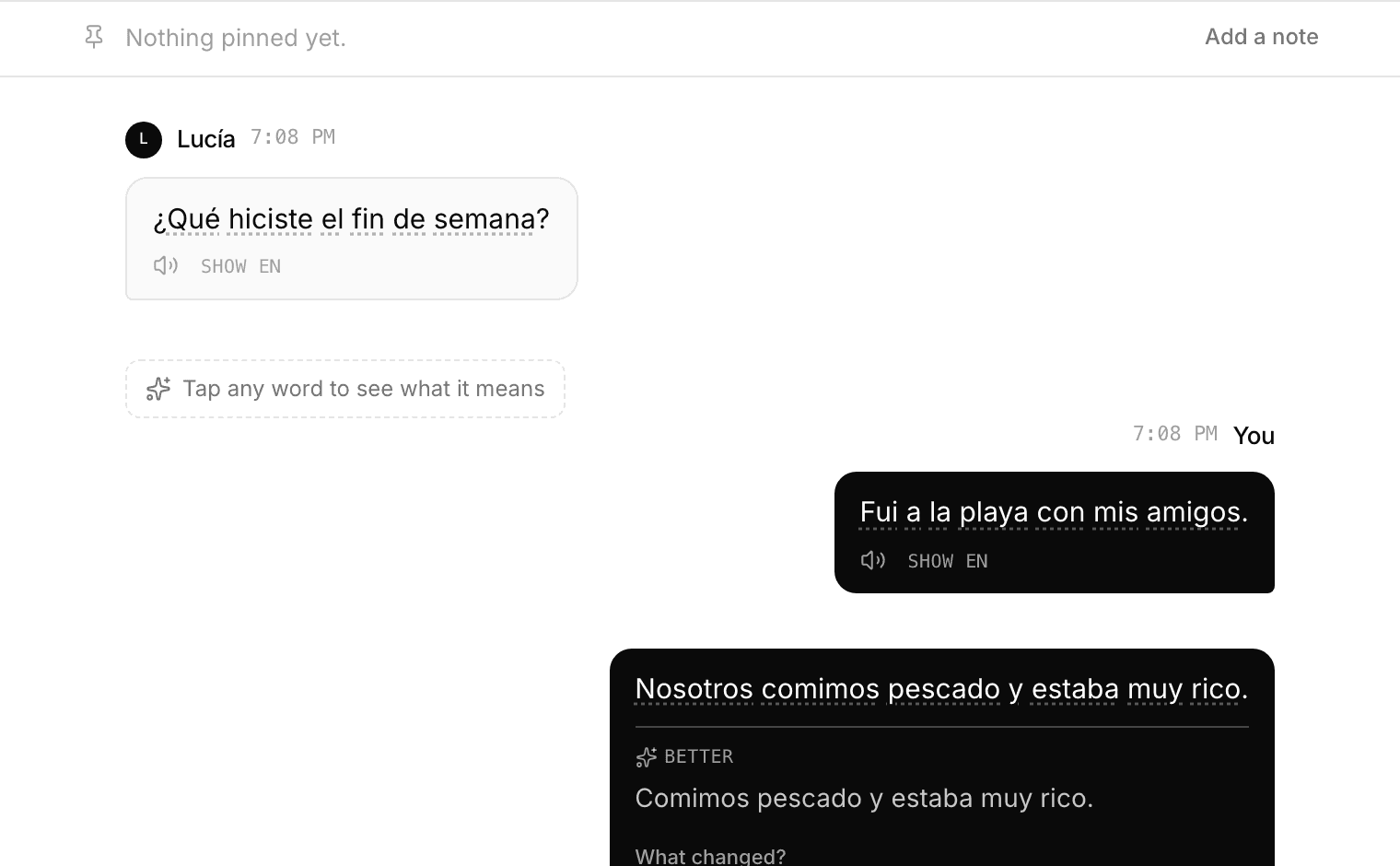
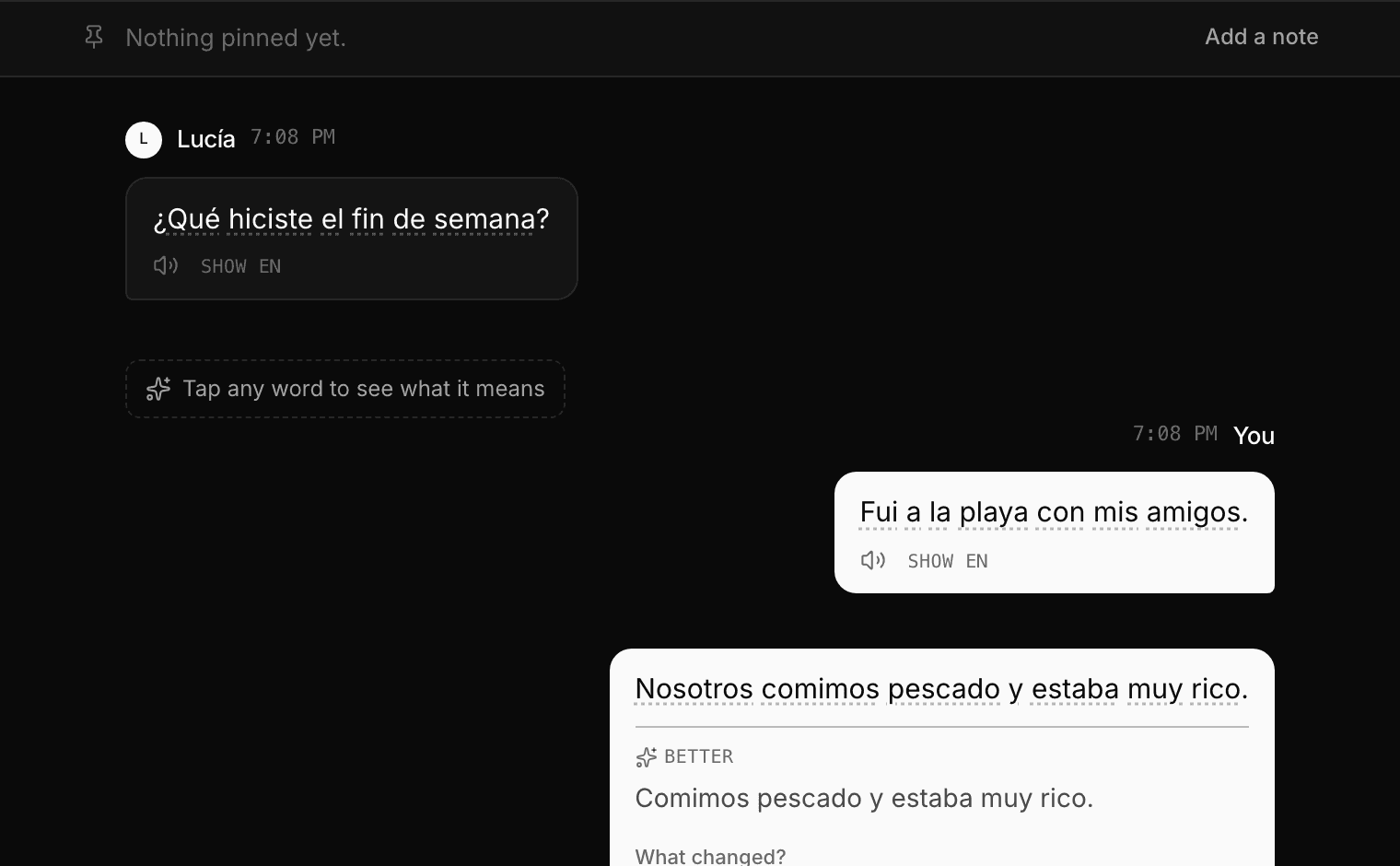
You write, and you are shown how a fluent speaker would have written the same thing. Not a grammar drill about the preterite, just your own sentence with the tense fixed, in the context you meant it.
After a few weeks it will tell you what you keep getting wrong, by name and with your own examples. Most people find it is one or two things, repeatedly, rather than everything.
Because it is a conversation, you meet the subjunctive when somebody uses it at you, which is the only way anybody has ever learned it.
Under any correction you can ask what changed, and it names what was wrong and the rule to remember, in the language you read rather than the one you are learning.
Starting
- Choose Learn and pick Spanish. The button above does both.
- Write badly on purpose. The corrections are the point, and a message you were unsure of teaches more than one you were safe with.
- If you know somebody who speaks it, send them the code. They write in Spanish, you read in Spanish, and their side stays effortless.