Learn Arabic.
Two hard things at once: a new script and a language built on roots.
What actually stops people
The script runs right to left, letters change shape depending on where they sit in a word, and the short vowels are usually not written at all. You are asked to read a word you have to already know.
Words are built from three-letter roots, which is elegant once you see it and bewildering before you do.
And the question nobody answers early enough: the written standard and the way people actually speak in any given country are different, so learners often study a language nobody chats in.
What happens here instead
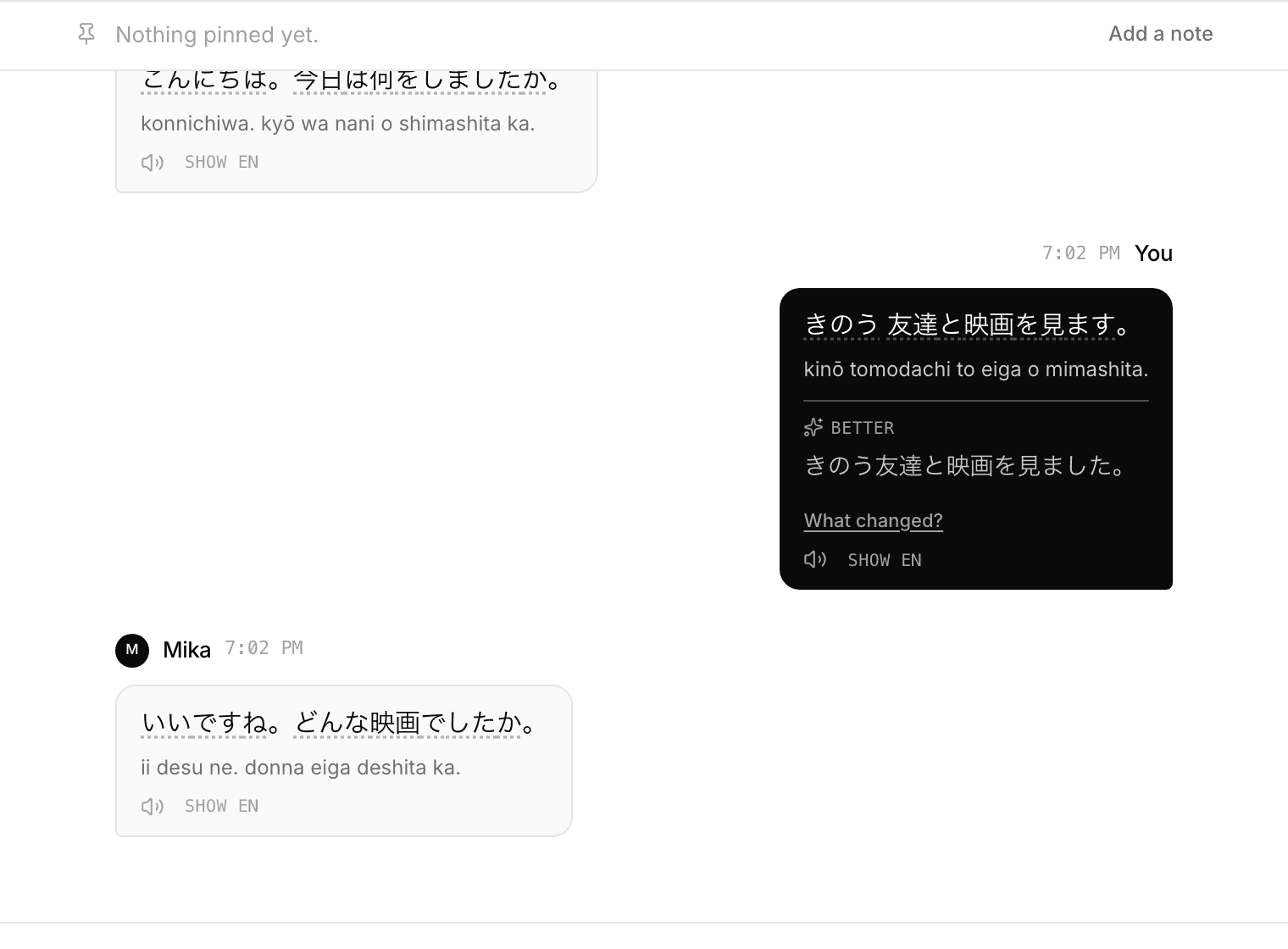
Every message shows how it is pronounced in Latin letters, so the missing vowels are supplied for you while you learn to do without them.
The layout is right to left, in the messages and in the box you type into, rather than a left-to-right app with Arabic poured into it.
Because you are talking to a person, you learn the Arabic they actually write, which is the one you wanted.
Under any correction you can ask what changed, and it names what was wrong and the rule to remember, in the language you read rather than the one you are learning.
Starting
- Choose Learn and pick Arabic. The button above does both.
- Lean on the pronunciation line at first, and try to read the script before you look at it.
- Tap words rather than sentences. The root system means one word learned properly pays for several.