Learn English.
The reading is easy and the spelling is a liar.
What actually stops people
Spelling that stopped matching pronunciation several centuries ago, so a word you have read is not a word you can say and a word you have heard is not a word you can spell.
Phrasal verbs, where take off, take up, take in and take over share a verb and share nothing else. There are thousands and they cannot be worked out.
Articles. A, the, or nothing at all is a decision English speakers make without noticing, and speakers of languages without articles have to make it consciously every sentence.
What happens here instead
You write to somebody who reads in their own language, so you can practise English without either of you carrying the conversation alone.
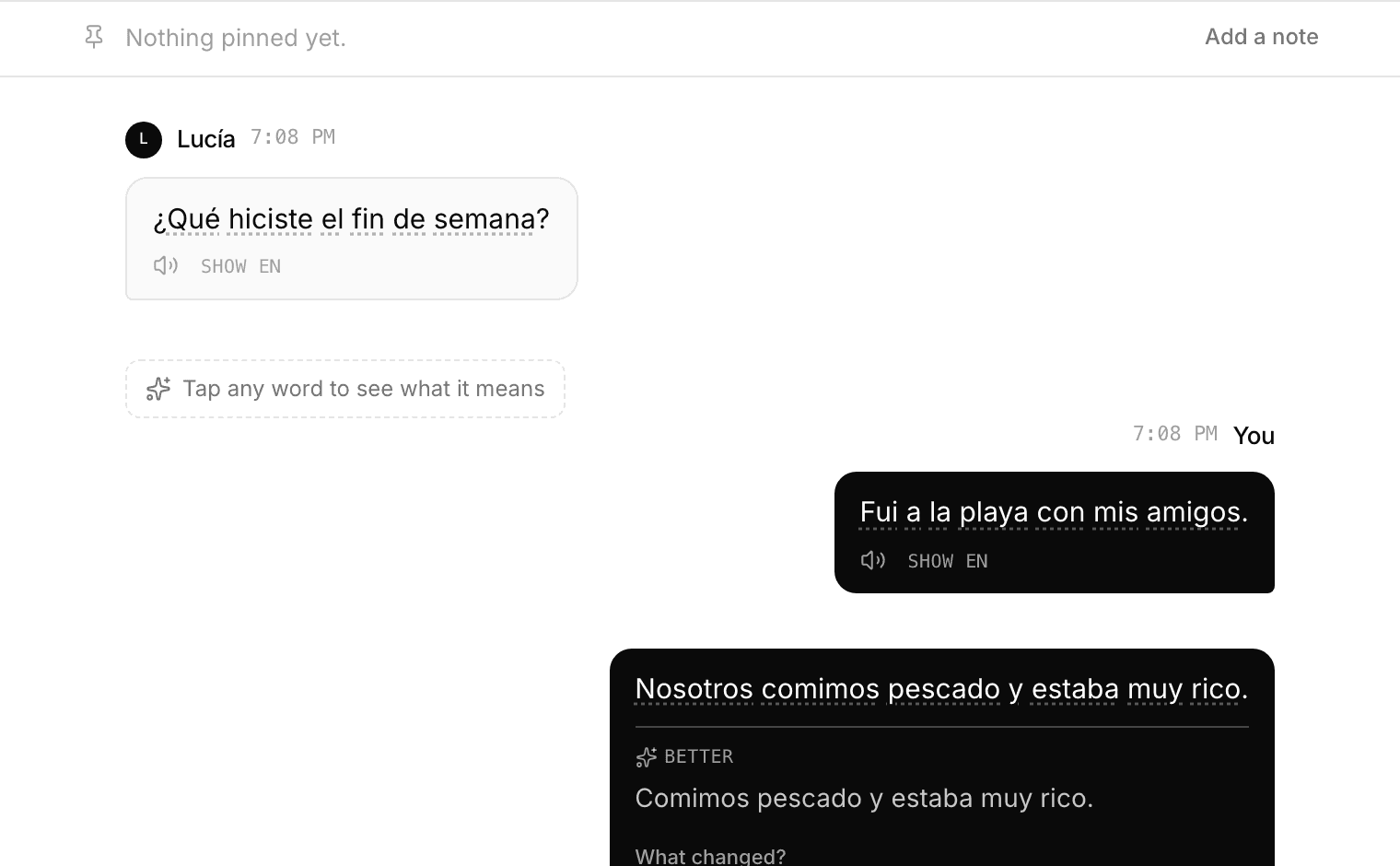
Every message you write is marked with how a fluent speaker would have put it, which is exactly the feedback articles need: there is no rule to look up, only a thousand corrected examples.
The mistake patterns are blunt about it. If you drop articles, it says so, with your own sentences.
Under any correction you can ask what changed, and it names what was wrong and the rule to remember, in the language you read rather than the one you are learning.
Starting
- Choose Learn and pick English. The button above does both.
- Write to somebody who does not share your first language. It removes the temptation to fall back.
- Read your corrections next to what you wrote. Articles and phrasal verbs are learned by noticing, not by studying.