Learn Italian.
The friendliest of the big European languages to start, and it stays hard in one place.
What actually stops people
Very little at the beginning. Italian is spelled as it sounds, the vowels are clean, and an English speaker reads a sentence aloud passably on day one.
The verbs are where it gets real. Six endings a tense, several past tenses that divide up the past differently from English, and a subjunctive that ordinary people use in ordinary sentences.
And pronouns that attach to verbs and to each other, which is the point most learners describe as the wall.
What happens here instead
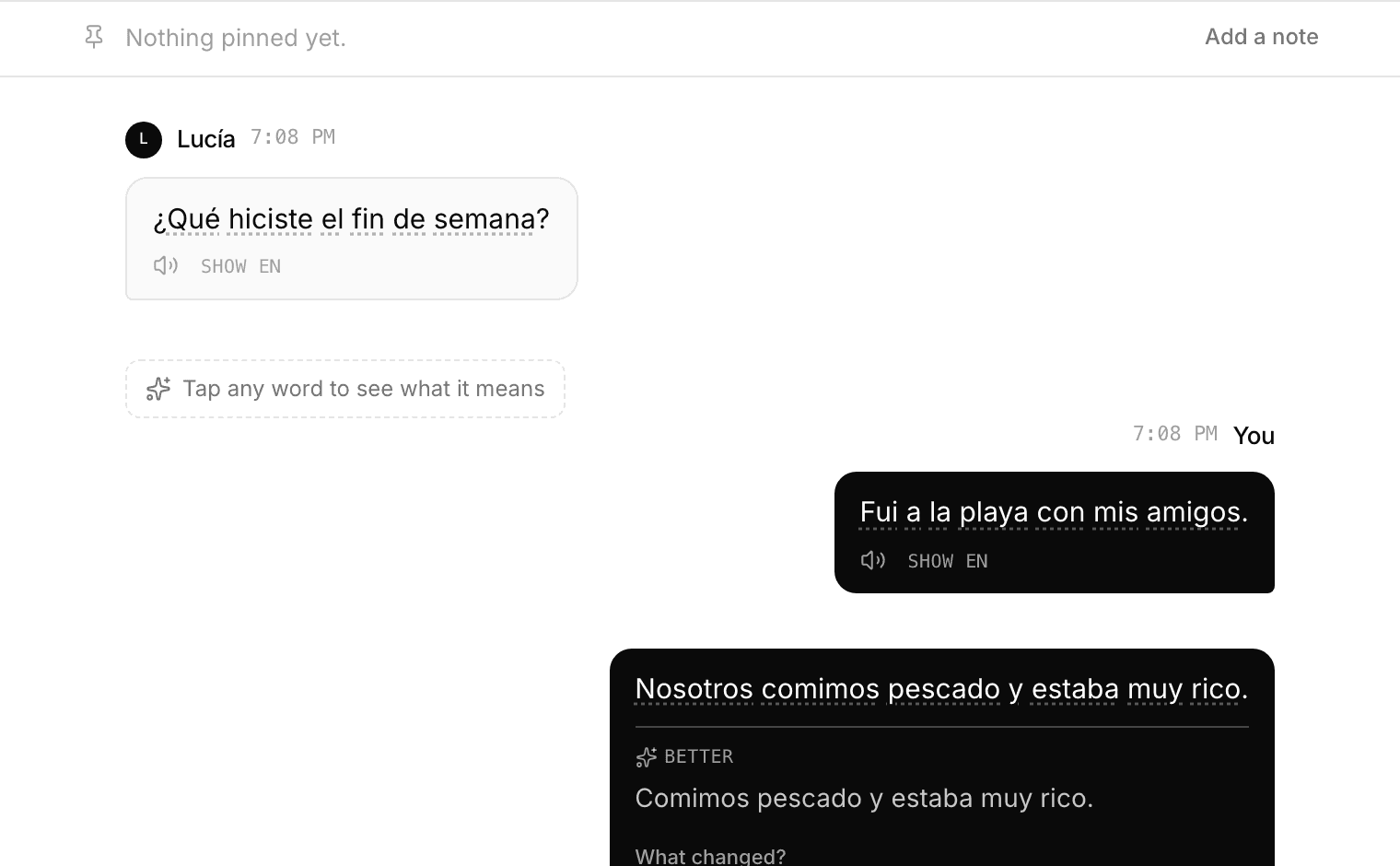
You get corrected in your own sentences, so the verb endings are fixed where you actually got them wrong rather than in a conjugation table you will forget.
The mistake patterns will tell you plainly which tense you keep reaching for wrongly, which for Italian is nearly always the same one.
Ren writes at your level, so a beginner is not buried in the subjunctive before they can order a coffee.
Under any correction you can ask what changed, and it names what was wrong and the rule to remember, in the language you read rather than the one you are learning.
Starting
- Choose Learn and pick Italian. The button above does both.
- Say what you write out loud. Italian gives that back faster than most languages.
- Push into the past tense early. It is where the difficulty is, so it is where the practice is worth most.