Learn Japanese.
You can hold a conversation in Japanese long before you can read one.
What actually stops people
Three writing systems, two of which are alphabets you can learn in a fortnight and one of which is a few thousand characters you cannot. Most people quit here, because every other resource asks you to read before you may speak.
Then particles. は, が, を and に do the work that word order does in English, and no amount of vocabulary rescues a sentence that puts them in the wrong place.
And politeness, which is not decoration. The same sentence to a friend and to a stranger is two different sentences, and getting it wrong is louder than a grammar mistake.
What happens here instead
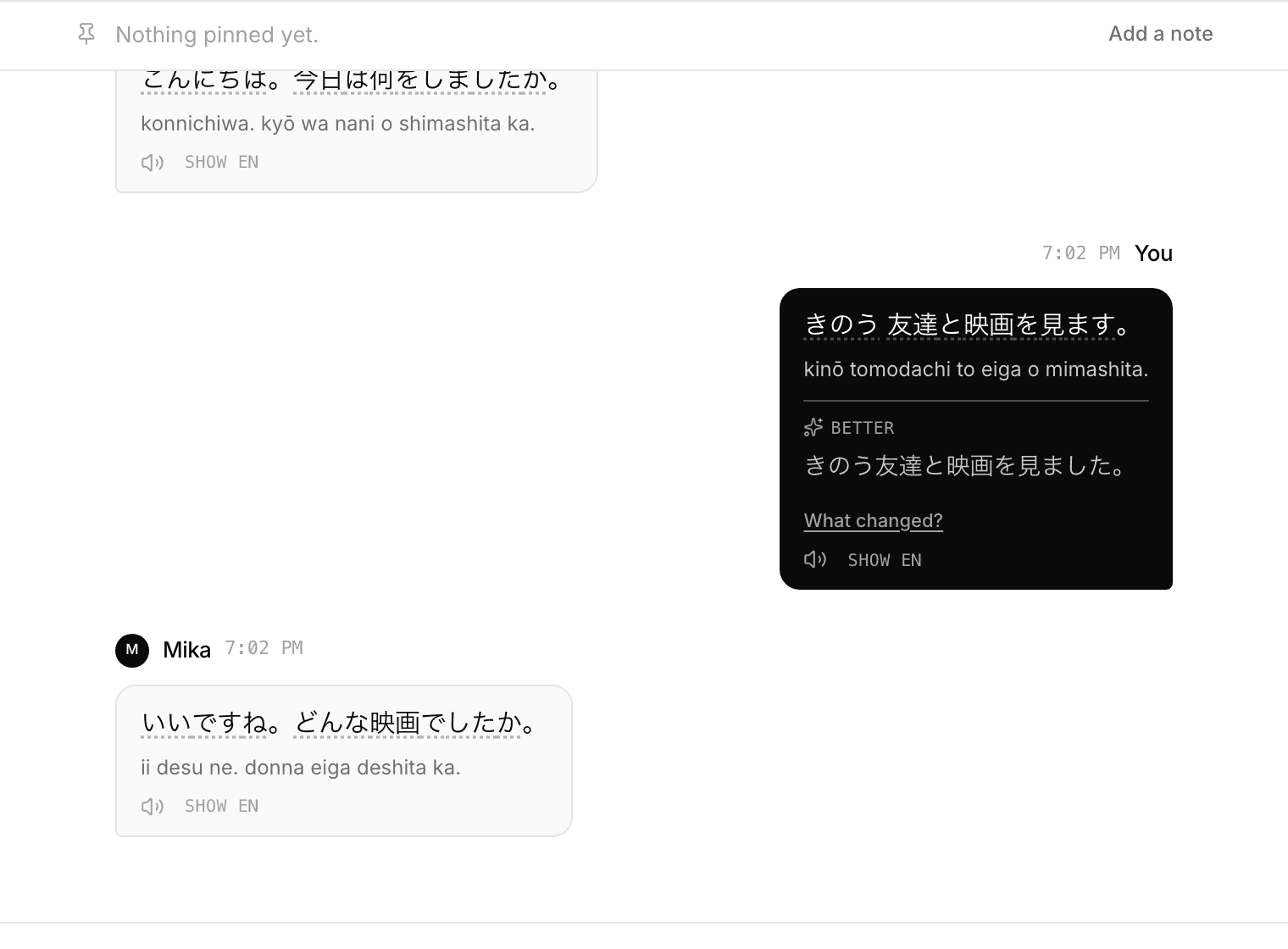
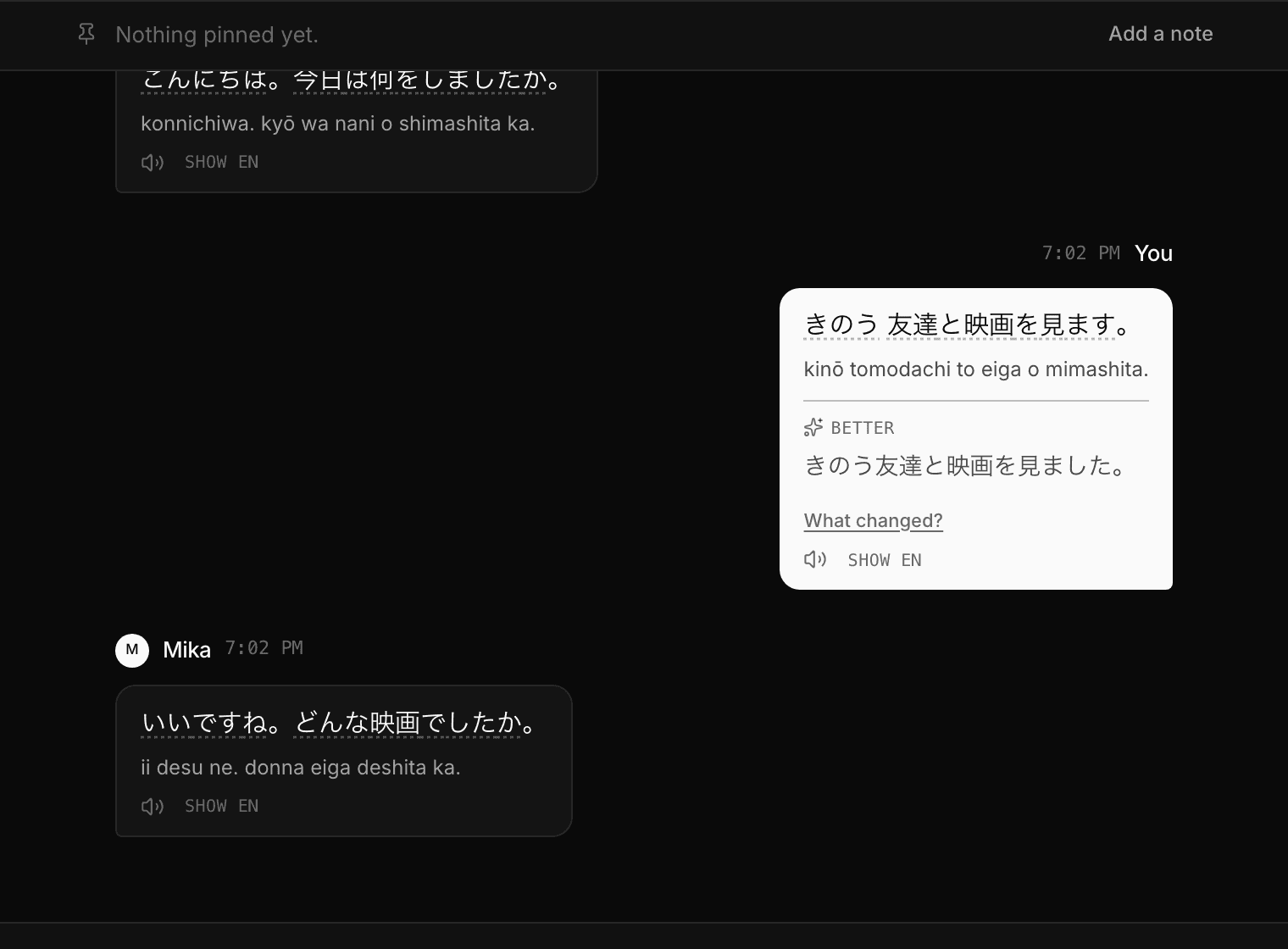
Every Japanese message shows how it is pronounced in letters you already read, using Hepburn, the romanisation a learner is actually taught. You can say a sentence out loud on your first day and read the characters later, in your own time, with the sound already in your head.
Tap any word and you are told what it means in that sentence, which for Japanese is most of the battle: a dictionary gives you six meanings for かける and the room gives you the one that was meant.
Particles are exactly the sort of thing the corrections catch. Write a sentence without は and you are shown the same sentence with it, and after a few weeks you are told plainly that you keep dropping it.
Under any correction you can ask what changed, and it names what was wrong and the rule to remember, in the language you read rather than the one you are learning.
Starting
- Choose Learn and pick Japanese. The button above does both.
- Ren is there when the room opens. She writes at your level, which for a beginner means short sentences and the commonest words.
- Tap anything you do not know. Those words come back on a schedule without you organising anything.