Learn Korean.
The alphabet takes an evening. Everything after that is the interesting part.
What actually stops people
Not hangul, whatever you have been told. It is a genuinely well-designed alphabet and an evening of effort gets you reading it slowly.
Word order does stop people. The verb goes last, so a Korean sentence resolves in the opposite order to an English one and you cannot translate as you go. You have to hear the whole thing.
And speech levels, which change the verb ending depending on who you are talking to. Getting it wrong is not a small mistake, and no textbook conversation prepares you for choosing one in real time.
What happens here instead
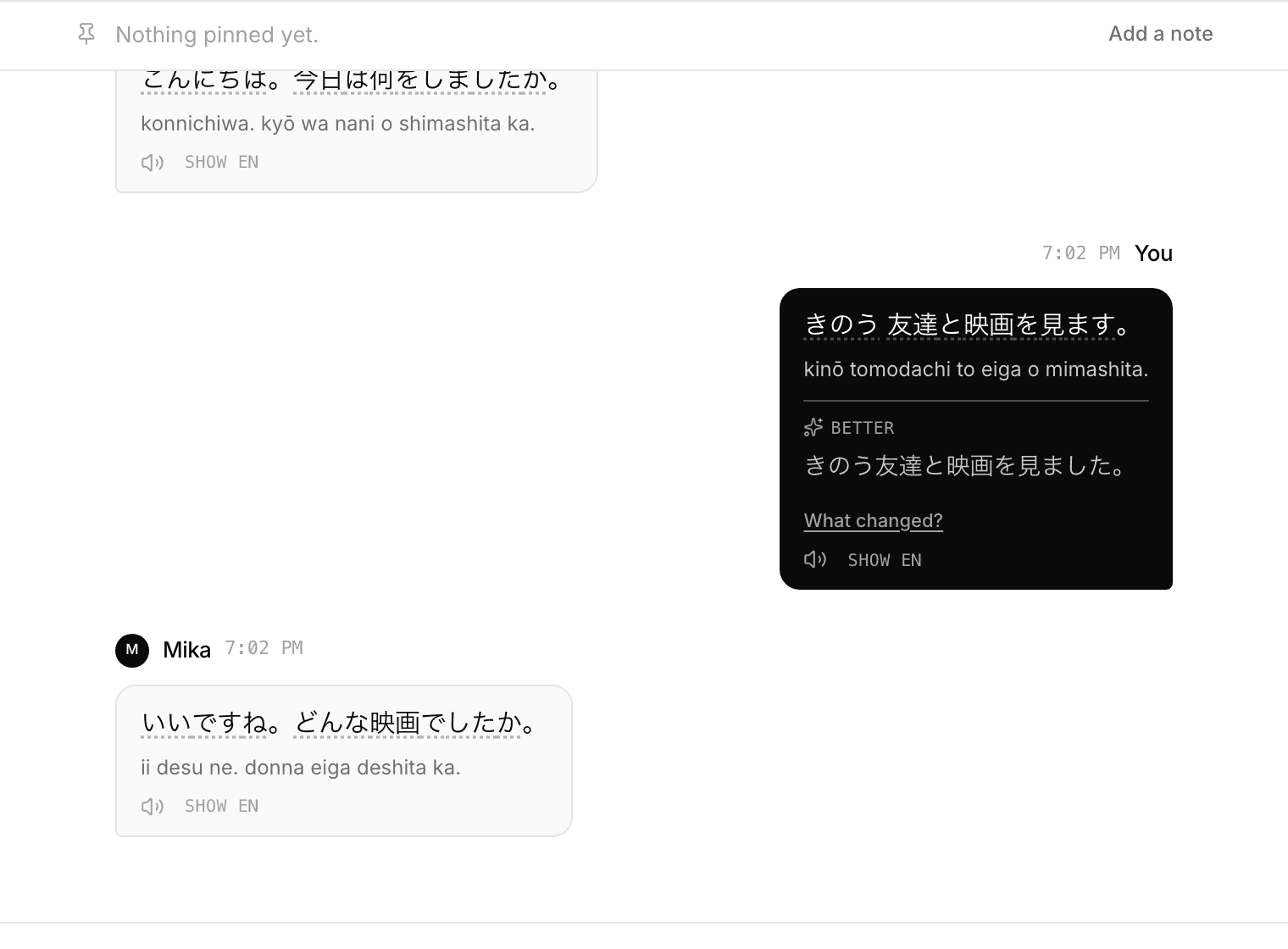
Every message shows its pronunciation in Latin letters, using Revised Romanization, so the evening you spend on hangul can happen after you have started rather than before.
Ren writes at the level you write at, which means a beginner gets 해요 speech and short sentences rather than a wall of formal endings they have not met yet.
Because you are reading real sentences rather than word lists, the verb-final order stops being a rule you know and becomes the order you expect.
Under any correction you can ask what changed, and it names what was wrong and the rule to remember, in the language you read rather than the one you are learning.
Starting
- Choose Learn and pick Korean. The button above does both, and you can ignore hangul for now.
- Read the pronunciation line under each message and say it out loud.
- Come back to the characters in a week. They are much easier once you already know what the words sound like.