Learn French.
You can read it long before you can hear it, which is the wrong way round.
What actually stops people
The spelling and the sound have parted ways. Half the letters at the end of a word are silent, words run into each other when spoken, and a sentence you can read perfectly is one you cannot recognise when somebody says it.
Gender, which is arbitrary and has to be learned with every noun rather than worked out.
And a written register that is genuinely different from how people speak, so a textbook leaves you fluent in a French that nobody uses in a message.
What happens here instead
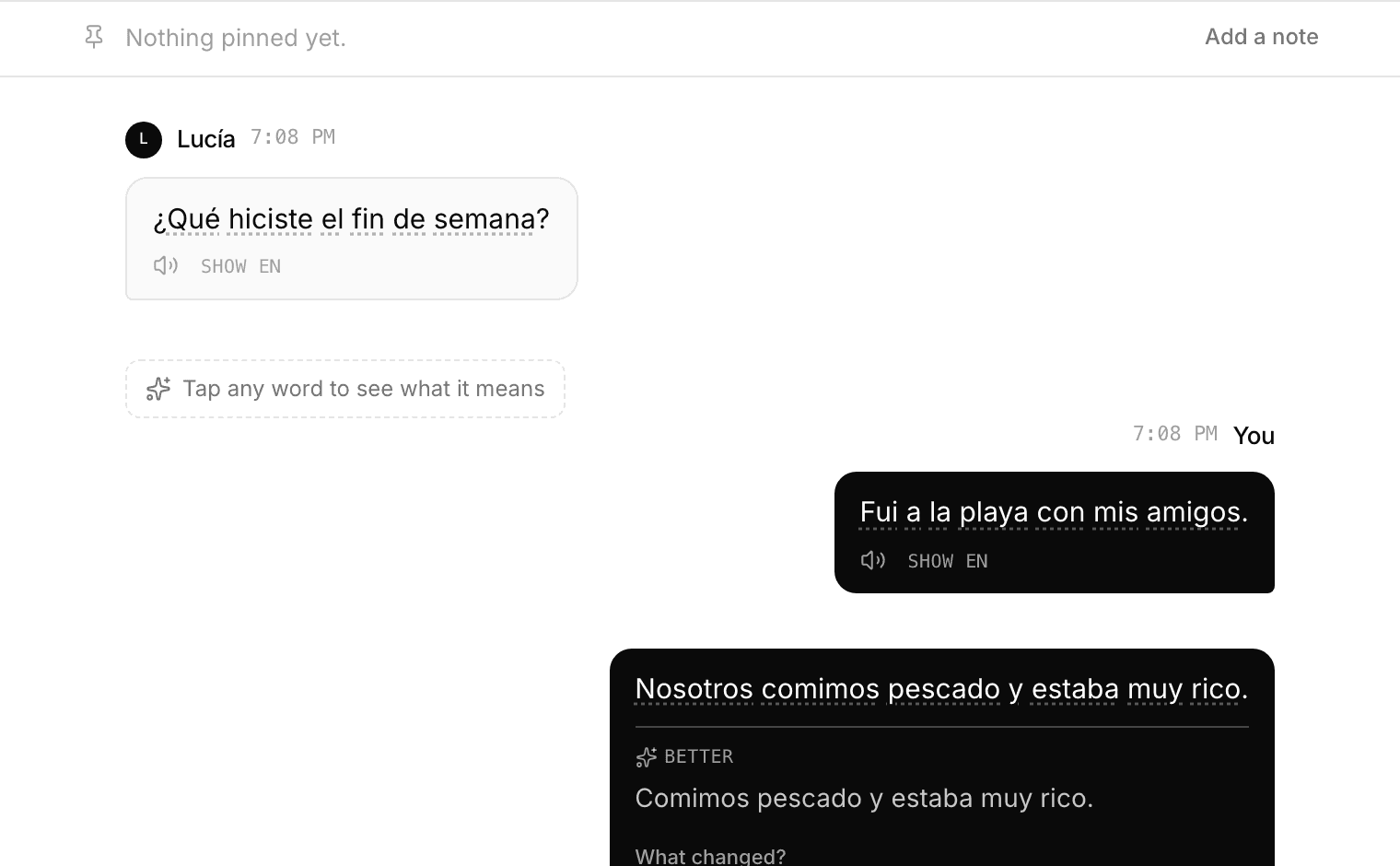
You are reading what a real person actually wrote to you, so the French you learn is the French people use, contractions and all, rather than the one exercises are written in.
Corrections keep your gender agreement honest without a drill. Write le instead of la and the corrected sentence shows it, in your own words, which is where it sticks.
Any message can be read aloud, so you can hear the version of a sentence that the spelling was hiding from you.
Under any correction you can ask what changed, and it names what was wrong and the rule to remember, in the language you read rather than the one you are learning.
Starting
- Choose Learn and pick French. The button above does both.
- Write more than feels comfortable. French rewards volume, because the gaps are in agreement and idiom rather than in vocabulary.
- Play messages back. The distance between how it looks and how it sounds is the whole difficulty, and hearing it closes it.