Learn Portuguese.
Easy to read, harder to hear, and two versions of it worth choosing between.
What actually stops people
The sounds. Nasal vowels that English does not have, and in European Portuguese a habit of swallowing unstressed vowels that makes the spoken language look nothing like the written one.
Choosing between Brazilian and European, which differ in pronunciation, vocabulary and some grammar, and which most courses pick for you without saying so.
Verbs, as in every Romance language, with a personal infinitive that genuinely has no English equivalent.
What happens here instead
You are writing to a real person, so you learn whichever Portuguese they write, rather than the one a course chose on your behalf.
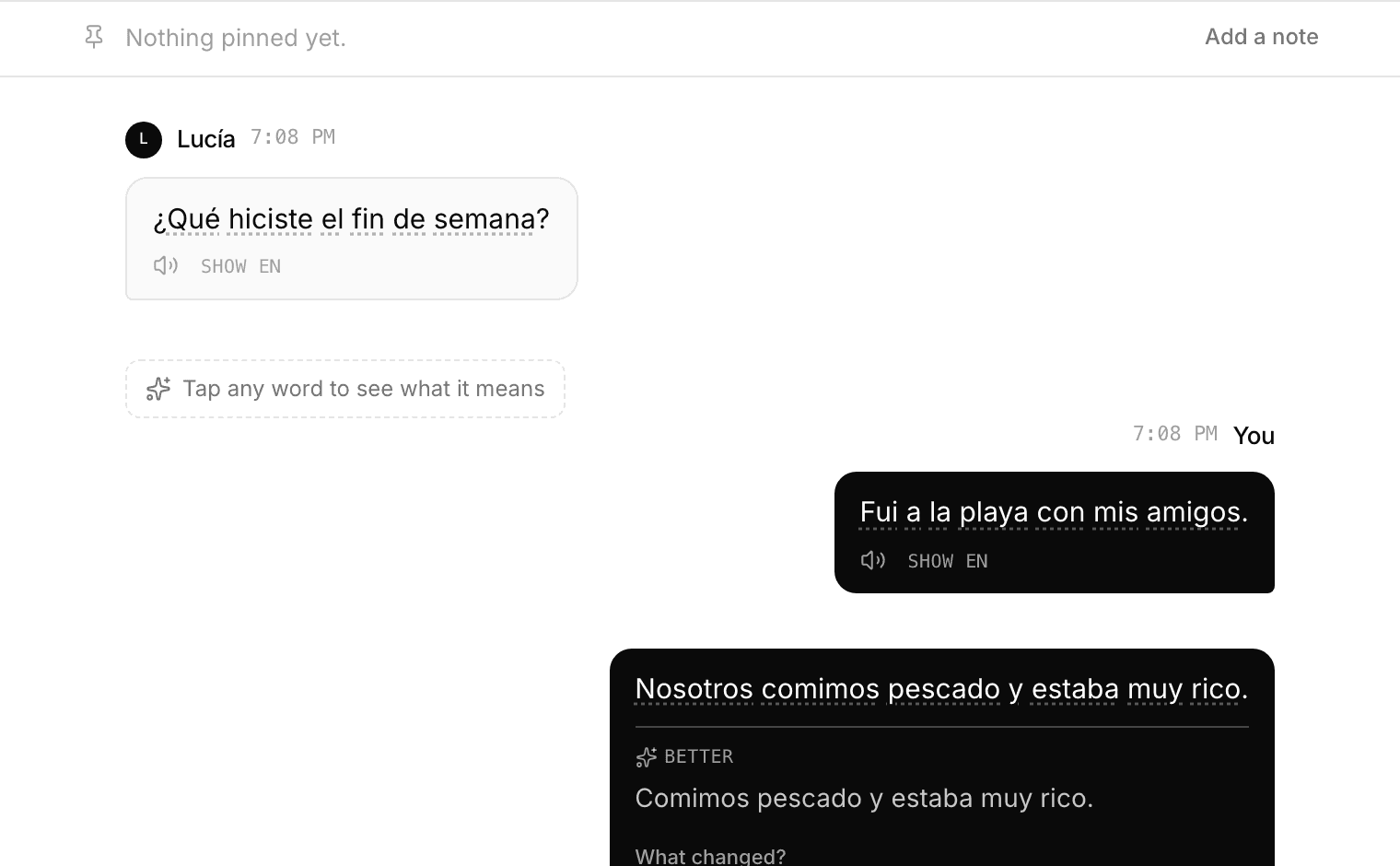
Messages can be read aloud, which is where the nasal vowels stop being a diagram and start being a sound.
Corrections work on your own sentences, so the verb forms are fixed in the places you actually use them.
Under any correction you can ask what changed, and it names what was wrong and the rule to remember, in the language you read rather than the one you are learning.
Starting
- Choose Learn and pick Portuguese. The button above does both.
- Find somebody who writes the variety you want. That choice matters more here than in most languages.
- Play messages back rather than only reading them.