Finding out what you keep getting wrong
Being corrected four times is being told the same thing four times without being told it once. The review screen can read your corrections back and say what actually recurs.
Last updated 28 August 2026
What it does
It reads the corrections you have been given in one language and names at most four things you keep doing, each with how often, one example from your own writing, and one sentence on what to do instead.
A one-off is not a pattern and is left alone. If nothing recurs, it says nothing, which is a real answer.
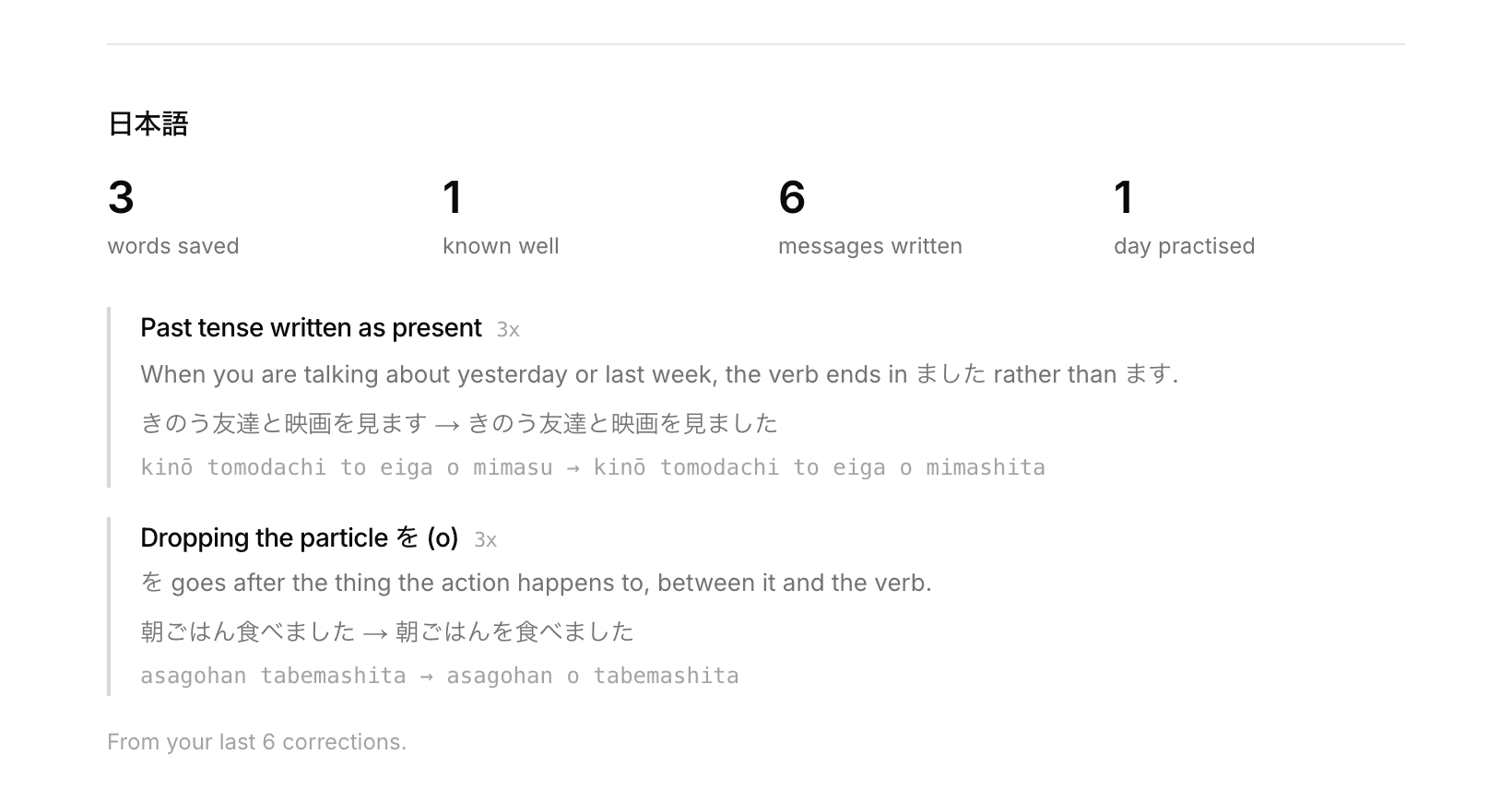
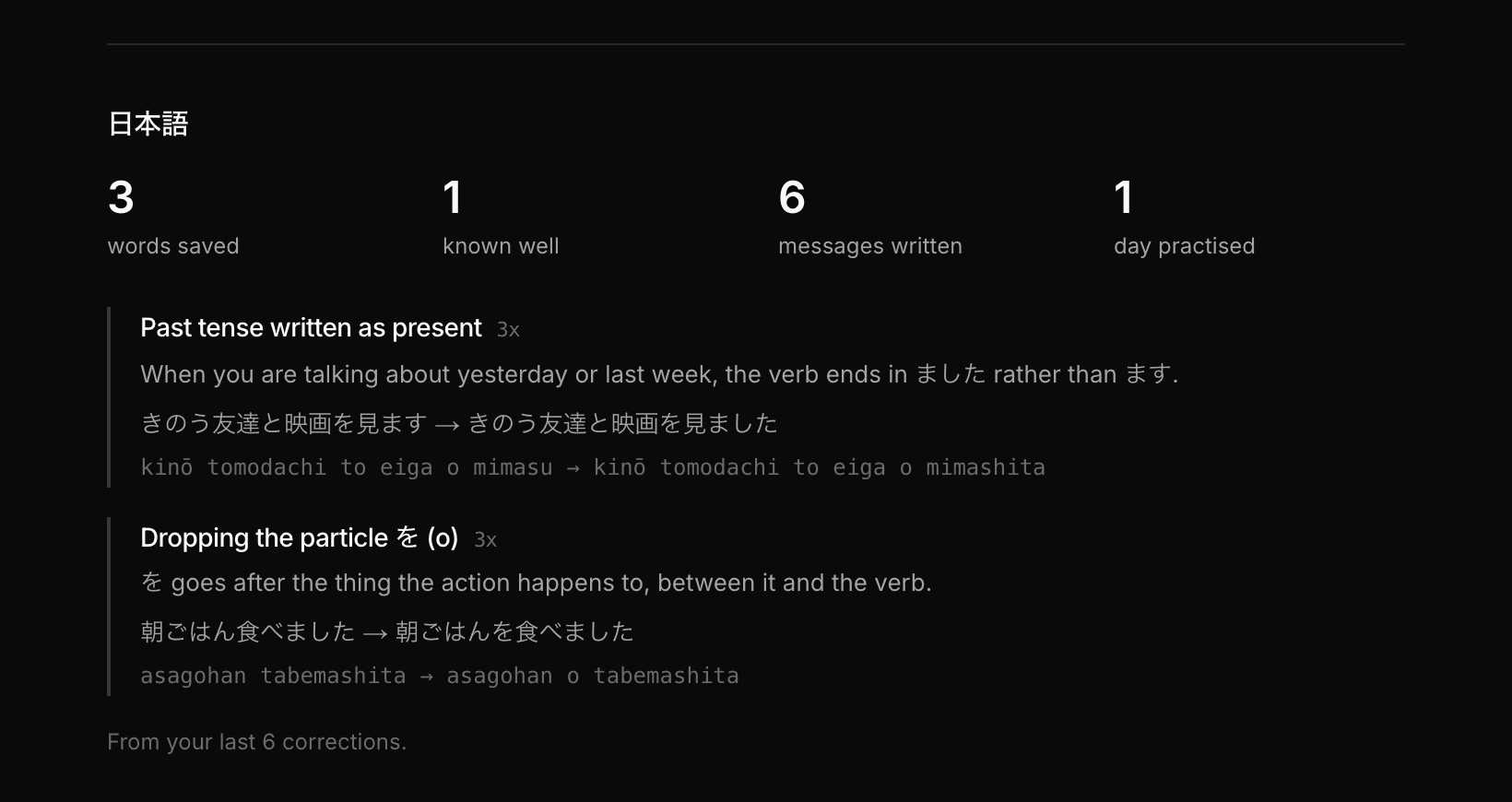
It is written in the language you read
Not the one you are studying. An explanation you cannot read explains nothing, which is the whole point of being a beginner.
The example is shown in the script and again in letters you can read, so you can see what changed even if you cannot read either sentence yet.
When to ask for it
It needs about five corrections before there is anything to find. After that it is worked out when you ask, and kept, so opening the page again shows the same answer rather than doing the work twice.
One correction has its own answer, in the room, under the line it is about: ask what changed and you are told about that sentence. This is the other end of the same idea. Use the one in the room when a correction surprises you, and this when you want to know what you have been doing all month.
Once another handful of corrections have arrived it offers to look again.
- Starting a room and inviting somebody
- How everyone reads in their own language
- Learning a language here
- Practising with Ren when nobody else is around
- Speaking instead of typing
- Reviewing the words you saved
- Learning a language written in a script you cannot read
- Talking to somebody who does not share your language
- Keeping a room, and deleting a conversation
- Putting a translating chat room on your own site
- Using Cross Convo to teach