Learning a language written in a script you cannot read
Most ways of learning Japanese ask you to learn the writing before you can use any of it. This does not, and that changes what a first week looks like.
Last updated 28 August 2026
Every message, twice
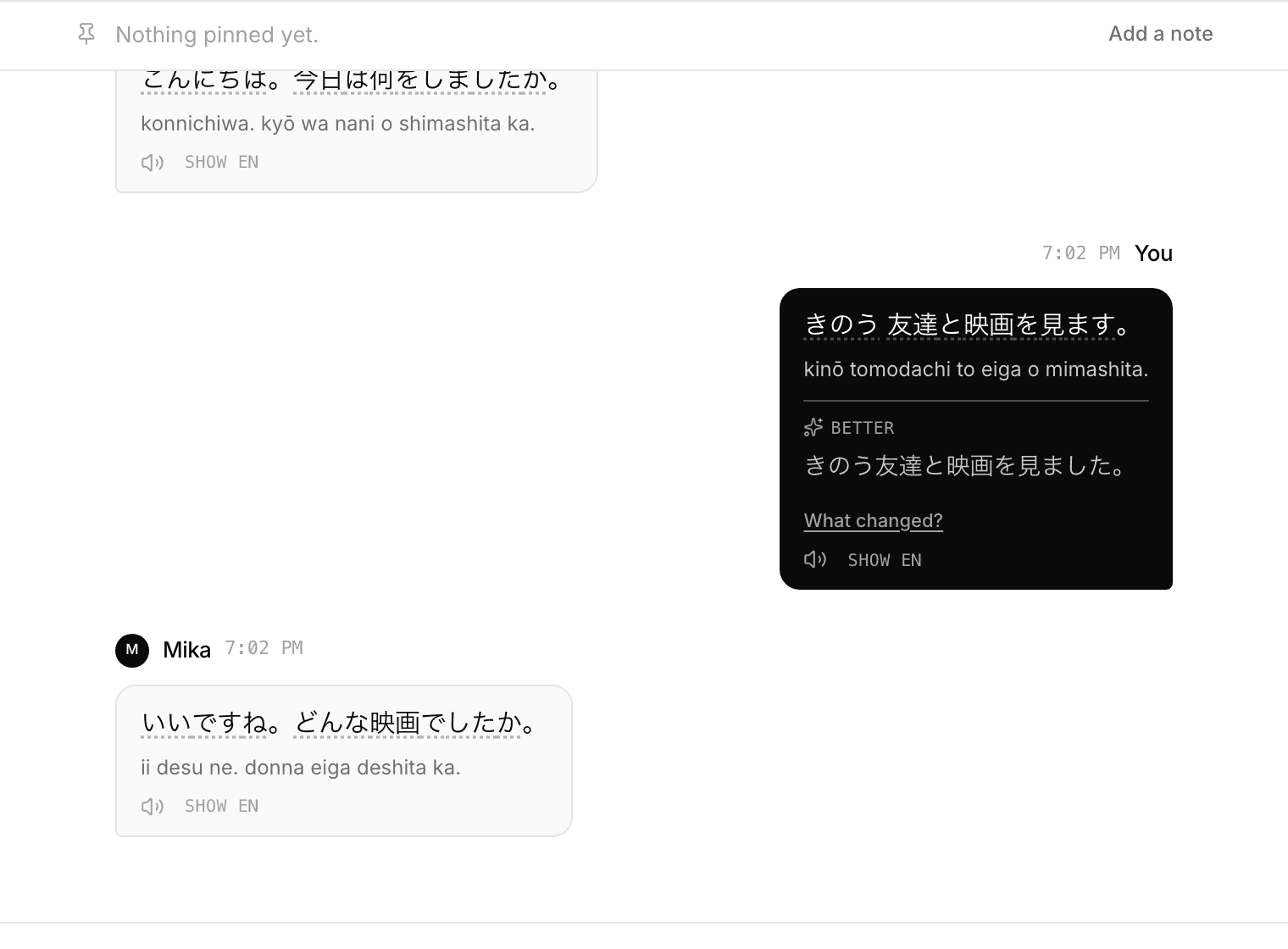
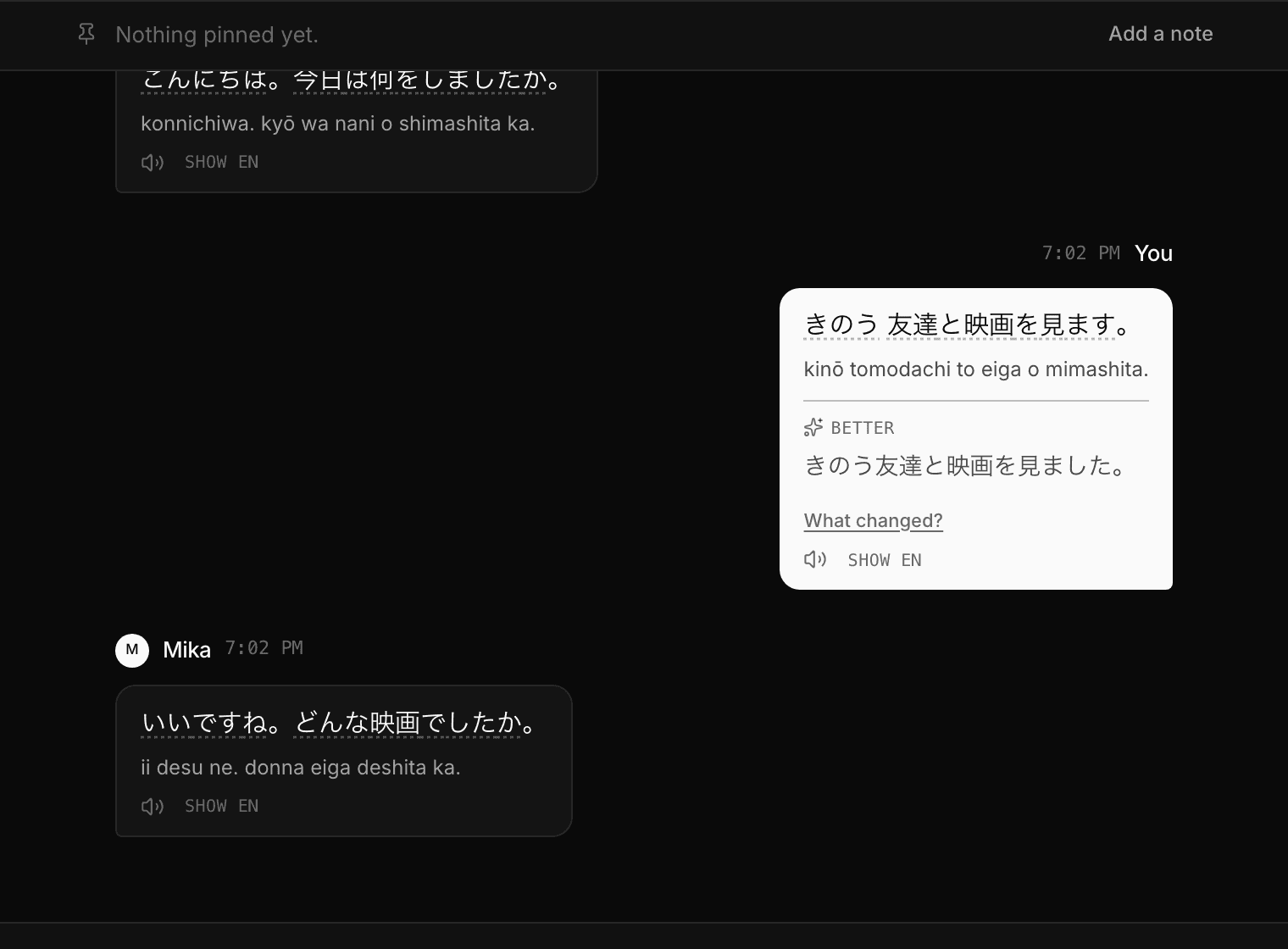
When the language you are studying is not written in the Latin alphabet, each message shows the sentence and, under it, how that sentence is pronounced in letters you already know.
It uses the romanisation a learner of that language is actually taught: Hepburn for Japanese, pinyin with tone marks for Chinese, Revised Romanization for Korean.
Which languages
Japanese, Chinese in both scripts, Korean, Thai, Burmese, Khmer, Lao, Arabic, Hebrew, Persian, Urdu, Pashto, Greek, Russian, Ukrainian, Bulgarian, Armenian, Georgian, Kazakh, Amharic, and the Indian scripts: Hindi, Bengali, Punjabi, Marathi, Gujarati, Tamil, Telugu, Kannada, Malayalam, Nepali and Sinhala.
Serbian is deliberately not on the list. It is written in both alphabets, and the Latin one is what comes back, so a pronunciation guide would repeat the sentence it sits under.
It follows you everywhere
The same applies to words you save, which show their pronunciation on the card and can be read aloud, and to the examples in your mistake patterns.
Right-to-left languages are laid out right to left, in the message, in the composer and on the card.
- Starting a room and inviting somebody
- How everyone reads in their own language
- Learning a language here
- Practising with Ren when nobody else is around
- Speaking instead of typing
- Reviewing the words you saved
- Finding out what you keep getting wrong
- Talking to somebody who does not share your language
- Keeping a room, and deleting a conversation
- Putting a translating chat room on your own site
- Using Cross Convo to teach