Learning a language by using it
The hard part of learning a language by using it is having somebody to use it with, and understanding enough to keep going. Both of those are the problem here.
Every word is a question you can ask
Words in the language you are studying are tappable. Tapping one tells you what it means in that sentence, not what a dictionary says it means in general, which is usually the difference between following a line and not.
Keep the ones worth keeping. They are held against your account, so something you tapped in a lesson last week comes back beside something you tapped this morning.
A whole line can be kept the same way, when the shape of the sentence is the thing worth having rather than any one word in it.
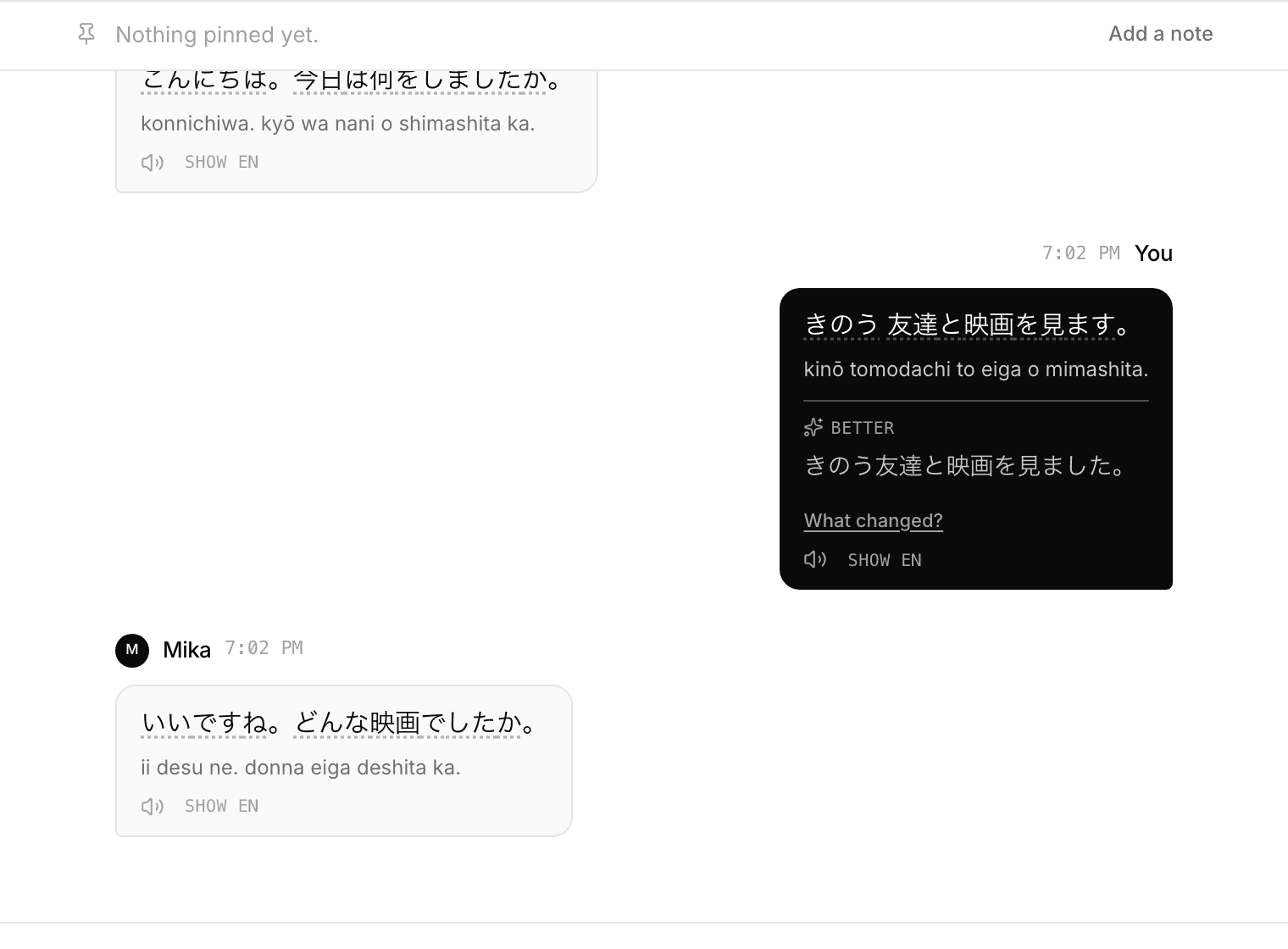
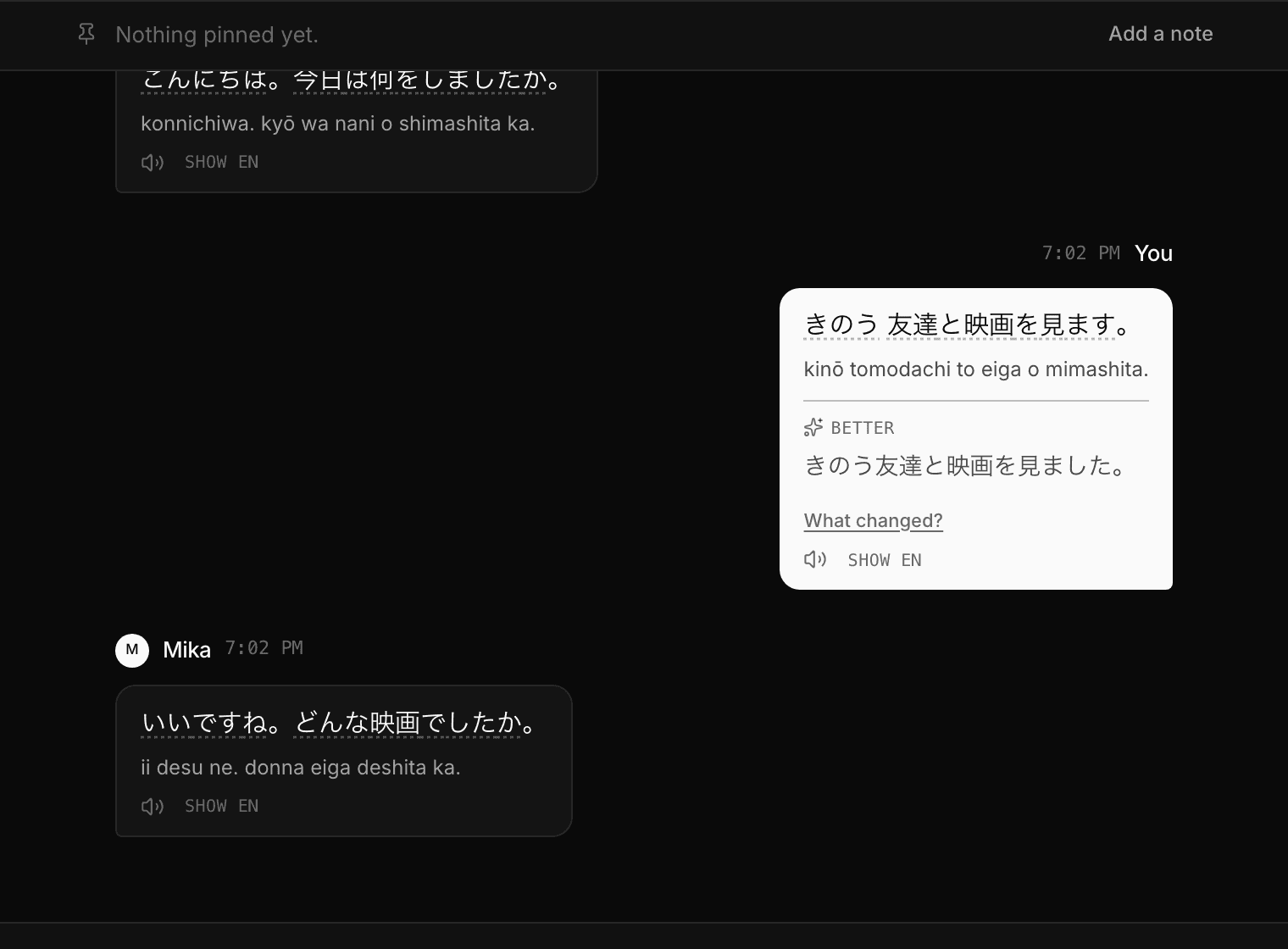
Your writing is marked as you go
When you write in the language you are studying, the room quietly shows how a fluent speaker would have put it. It corrects errors rather than style, and leaves your meaning alone.
Nothing is set. How much it corrects follows how well you write, worked out from what you have already written rather than from a form you fill in.
Under any correction you can ask what changed, and it names what was wrong and the rule to remember, in the language you read. Being shown the right sentence answers what. This is the one that answers why.
When nobody else is around
There is an AI to practise with, in the language you are studying, one or two sentences at a time and always asking you something back. She works in the words you saved and are closest to forgetting, so they turn up in a sentence somebody is saying to you.
She needs an account, which is an email and no password. Twenty replies a month come with the free plan, and five hundred with Premium.
A script you cannot read yet
If the language is not written in the Latin alphabet, every message also shows how it sounds in letters you can read, using what a learner of that language is actually taught.
Japanese, Chinese, Korean, Thai, Arabic, Hebrew, Greek, Russian, Hindi and the rest. It means you can say a sentence out loud on the first day.